
Japanese Nakiri Knife | Katagami
Materials
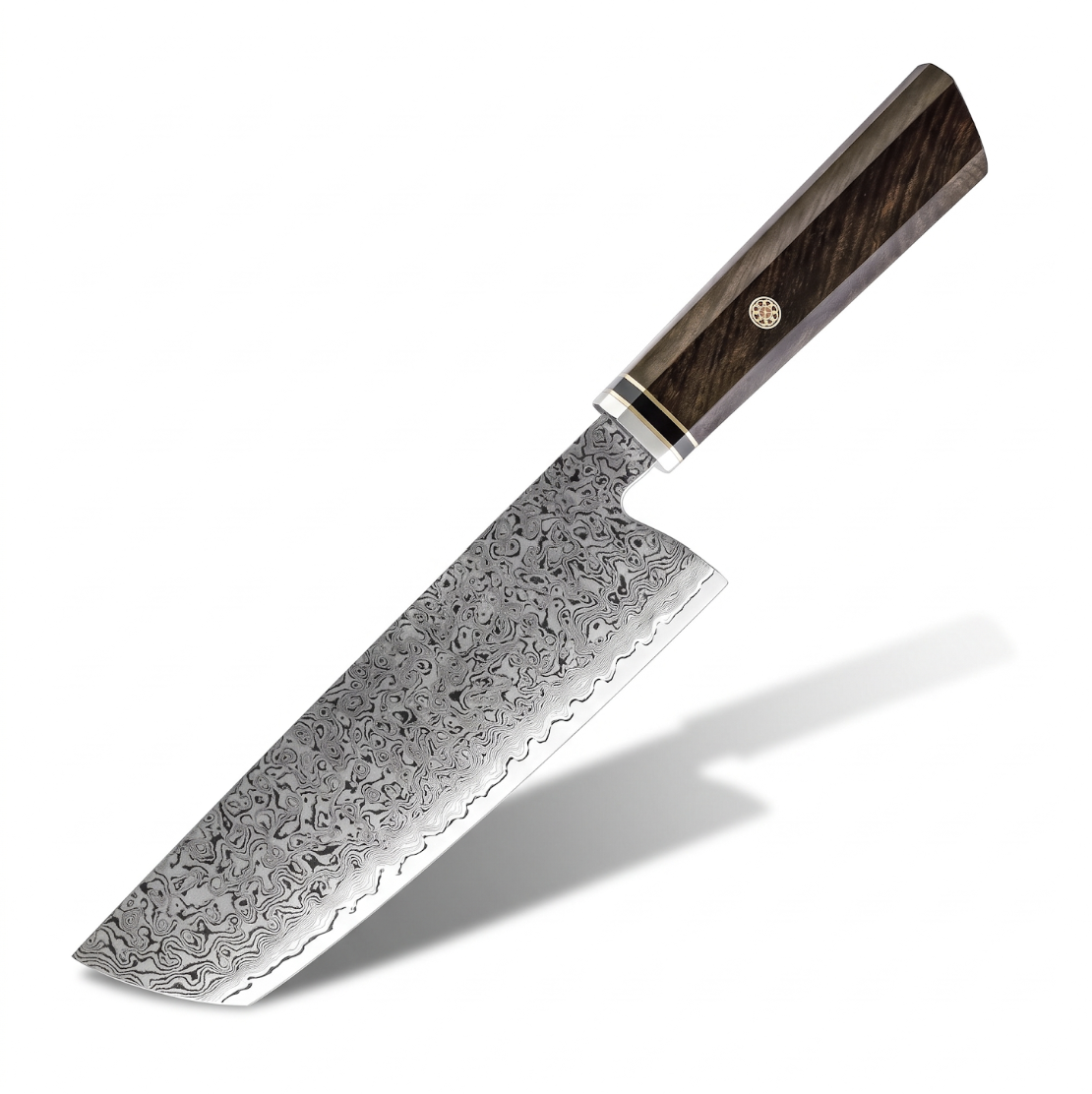
Material: Damascus steel
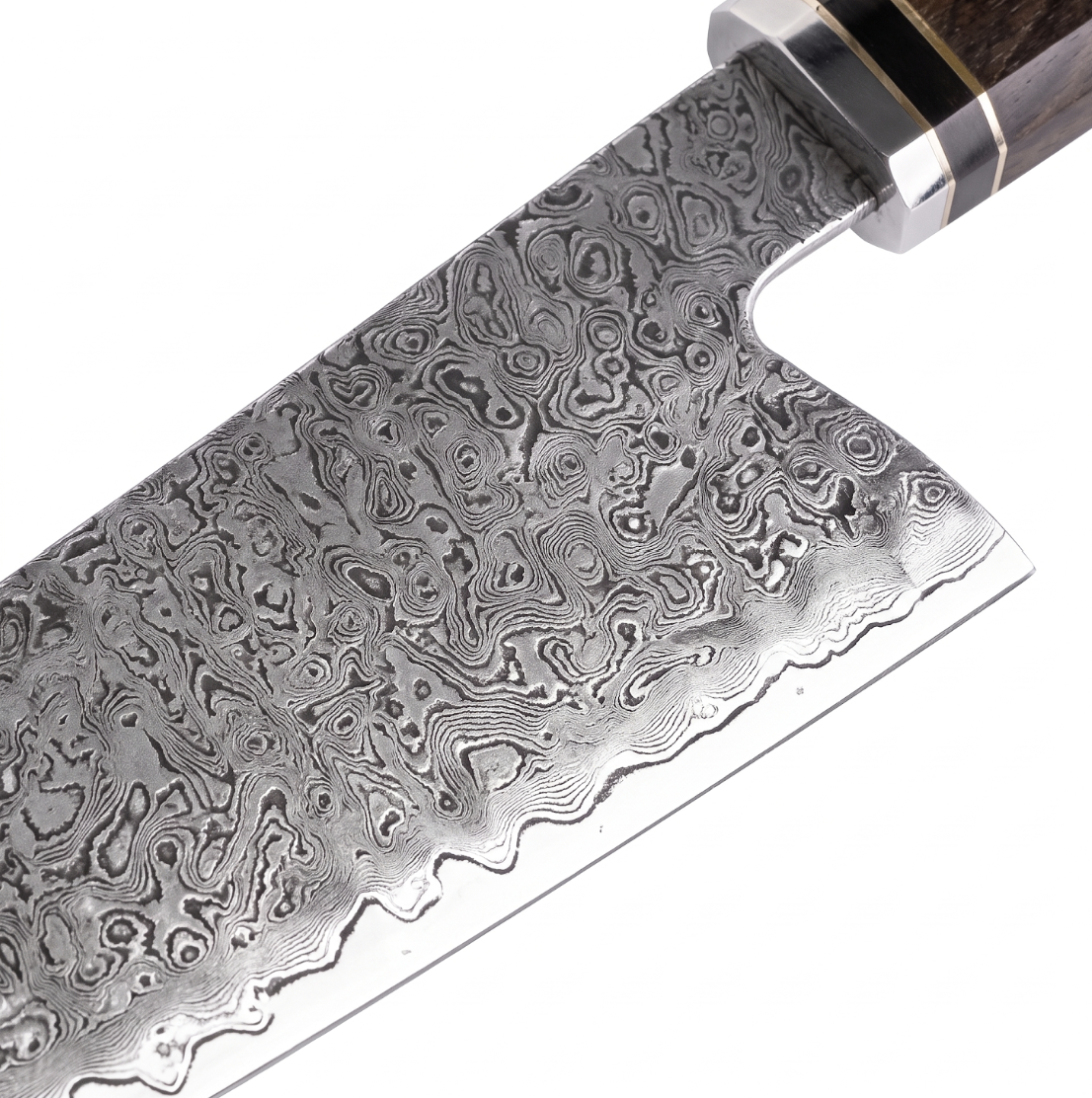
Damascus steel is forged from multiple layers of different steels, then polished to reveal its pattern. This technique, inherited from Japanese blacksmiths, combines hardness and strength.
Hard steel core: 60 ±2 HRC, for a precise and durable edge
Softer outer layers: they protect the blade from impacts and wear
Unique pattern: the wavy grain patterns are different on each blade
Care
- Hand wash in warm water with mild soap, then dry immediately with a cloth.
- Avoid the dishwasher and prolonged soaking to preserve the blade and handle.
- Regular sharpening helps maintain optimal sharpness over time.
Optimal Storage
To protect the sharpness and pattern of your blades, always store them clean and dry.
- The knife block holds each blade in its slot, protected from impacts, and keeps the countertop clear.
- The knife stand showcases your knives and keeps them within easy reach, preventing any contact between the blades.
In either case, avoid storing knives loosely in a drawer: they clash, the cutting edge gets damaged and the risk of injury increases.
Nakiri: The Vegetable Specialist
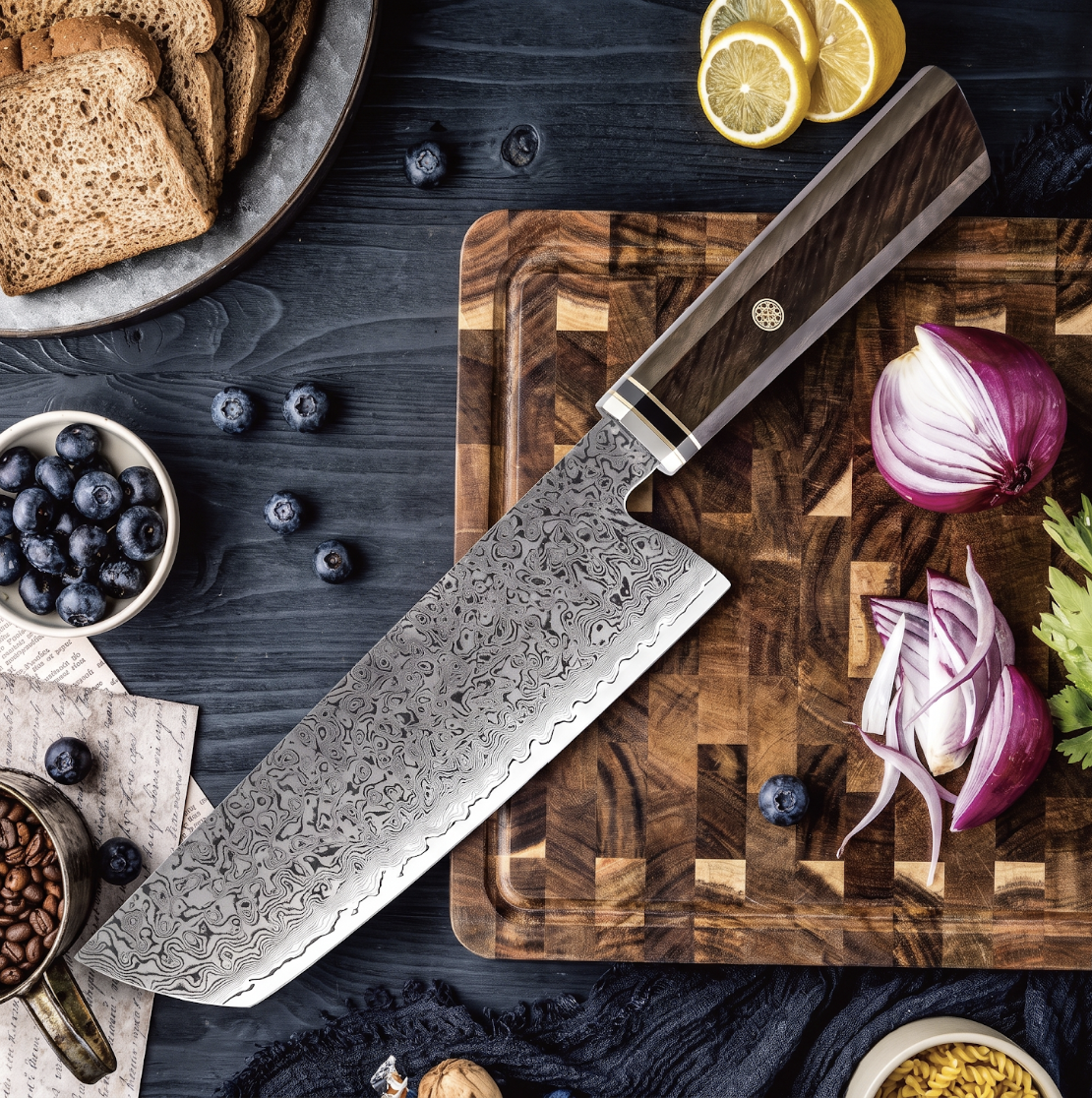
The Nakiri is the ultimate Japanese knife for vegetables. Designed for precision and consistency, it excels at slicing, julienning, finely chopping, and mincing herbs, fruits, and tofu. Its high, rectangular blade with a nearly flat profile favors push-cutting (a vertical motion) rather than a rocking motion, offering excellent stability on the cutting board and perfectly straight slices. The blade height protects the fingers and makes it easy to gather cut food. Ideal for julienne, brunoise, and ultra-thin cuts, the Nakiri quickly becomes the main ally of your daily plant-based preparations.
Knife Specifications
- Blade size: 18 cm (7"), a compact size suitable for daily preparations
- Handle size: 13 cm
- Total length: approximately 31 cm, for a light and balanced grip
- Blade materials: Damascus steel
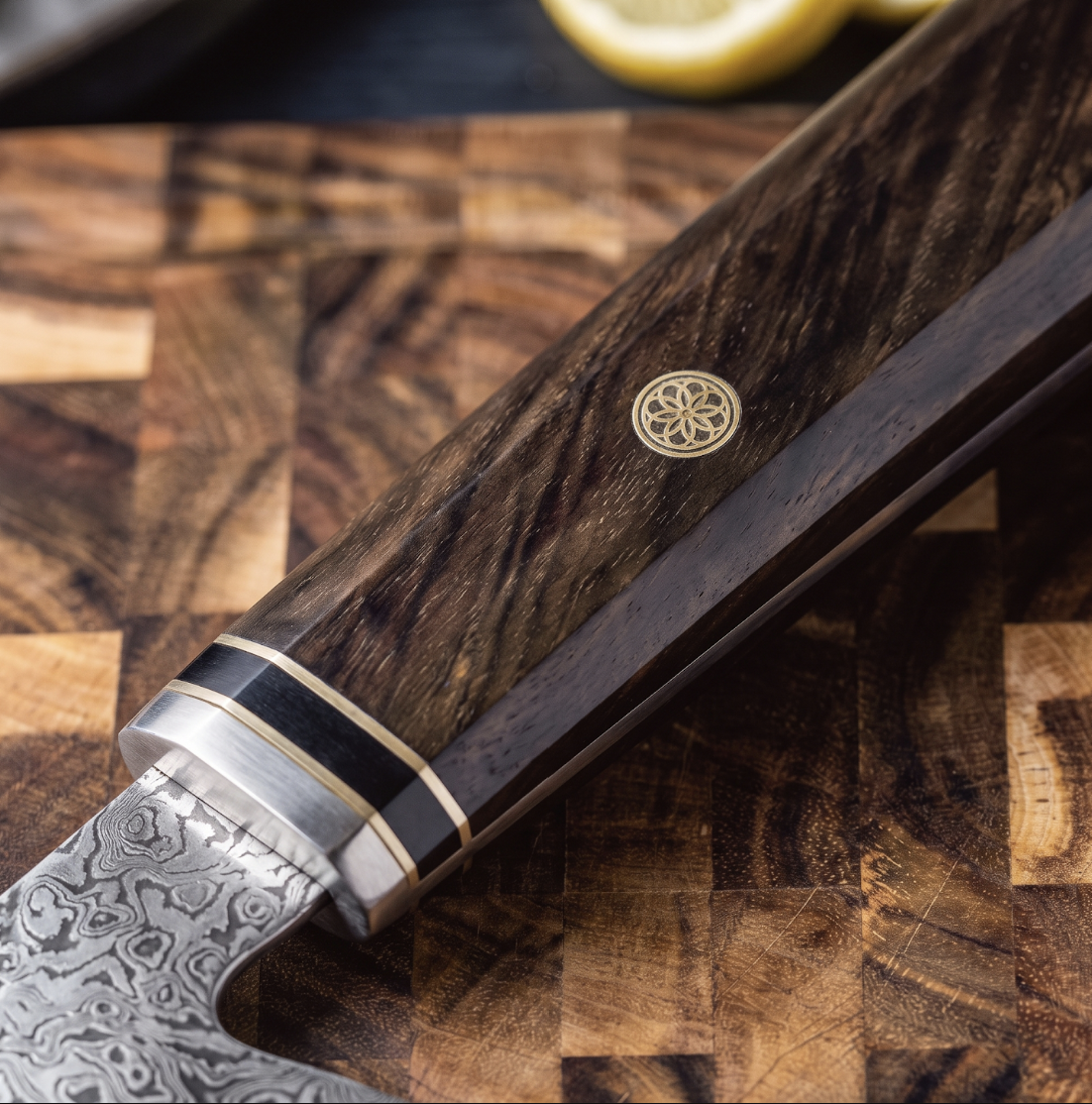
- Handle materials: Ebony, white and black ferrule
- Sharpness: angle greater than 60°, ensuring clean and precise cuts
- Hardness: approximately 60 ±2 HRC, for optimal resistance and precision of the edge

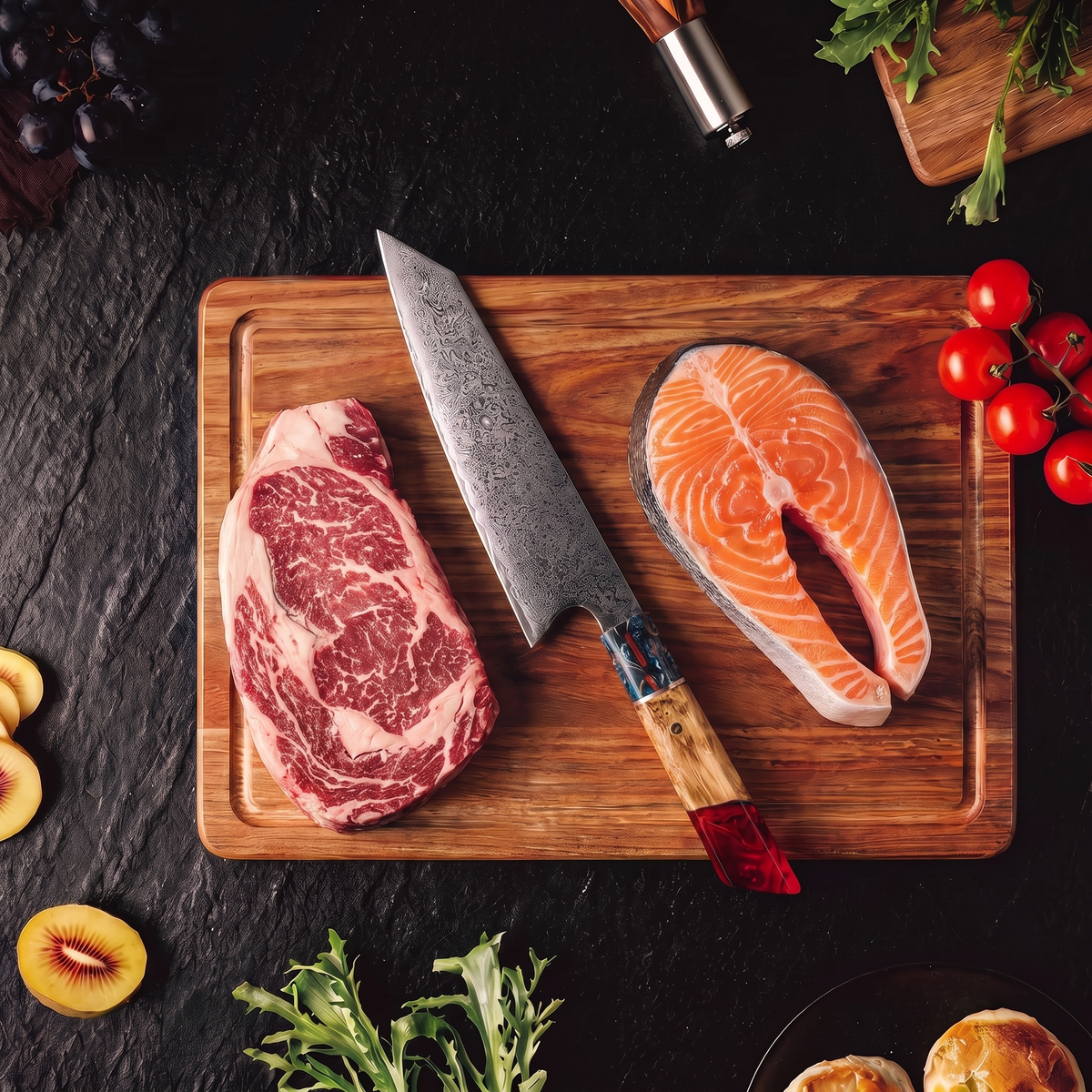
Blades for all foods
Vegetables: the Nakiri, for straight, uniform slices
Meats: the Gyuto and Kiritsuke, for slicing and trimming in one fluid motion
Fish: the Kiritsuke, for thin, clean slices
Everyday all-purpose: the Santoku and Bunka, for all common preparations
Fruit and precision: the Utility knife, for peeling, detailing, and mincing
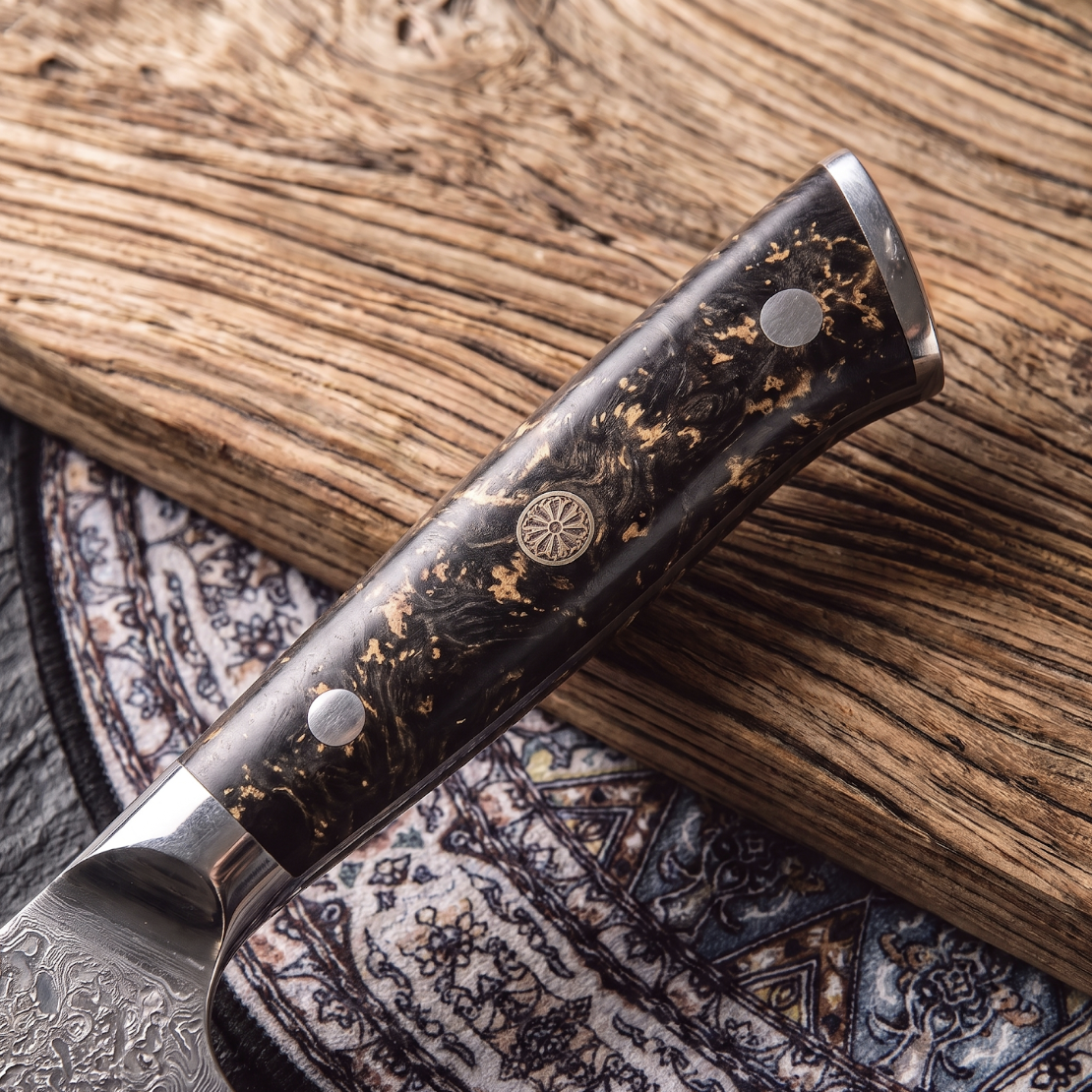
A choice of Artistic Handle, Noble Materials
- Gold-leaf sublimated carbon fiber
- Solid ebony wood
- Mother-of-pearl with iridescent reflections
Sandalwood, African rosewood...
Each Maison Yamato handle becomes a piece in its own right, chosen for its rarity as much as for its character.
Damascus steel: the excellence of Japanese cutlery
Precise, long-lasting sharpness: a hard steel core that retains its edge
Durable blade: flexible layers that protect against impact and wear
Clean, effortless cut: food is sliced, never crushed
Unique pattern: different veining on every blade, making each knife one of a kind
Japanese craftsmanship: a blacksmithing heritage recognized by chefs around the world
Blades for all foods
Vegetables: the Nakiri, for straight, uniform slices
Meats: the Gyuto and Kiritsuke, for slicing and trimming in one fluid motion
Fish: the Kiritsuke, for thin, clean slices
Everyday all-purpose: the Santoku and Bunka, for all common preparations
Fruit and precision: the Utility knife, for peeling, detailing, and mincing
A choice of Artistic Handle, Noble Materials
- Gold-leaf sublimated carbon fiber
- Solid ebony wood
- Mother-of-pearl with iridescent reflections
Sandalwood, African rosewood...
Each Maison Yamato handle becomes a piece in its own right, chosen for its rarity as much as for its character.
Our Promises


